
Over the past century, English has become the official language of the world and has already reached more than 1 billion speakers on the planet. It is well known that English is not particularly difficult to learn, but its development involves much more than that. Historical facts, events, and important royal, political, and social figures are all involved.
The rise of the USA after World War II was the first step toward economic and cultural superiority on a global scale. The position of the English language was consolidated by the 'American way of life', presented in Hollywood films. In addition to this, technological innovations from that period were also very important for establishing American dominance worldwide. Furthermore, the great impact during the Cold War should also be noted.
Today, English is the second most spoken language. Only Mandarin is ahead of it (for understandable reasons). English is the most used language in the global marketplace, in scientific research, and on the internet. It is the most studied and spoken language in the world, #1 in the number of non-native speakers, whose numbers are growing year after year.
In this material, we will try to show you how English has developed throughout history. We will introduce you to important facts, people, and languages that have contributed to the evolution of the English language as we know it today.
Pre-English (before 500 AD)
English, like most European languages spoken today, is a member of the Indo-European language family. Somewhere around 3500 BC, Indo-Europeans began to spread throughout Europe. By 600 BC, a specific group called the Celts settled on the British Isles. This immigration continued to grow over the centuries until the Roman occupation, which occurred in 55 BC.
Although the Celts dominated the British Isles for centuries, the Celtic language had very little impact on English. Some place names remain, such as Cornwall, London, Kent, and York. There is some impact on grammar as well, such as the use of continuous tense (he is playing instead of he plays), which cannot be seen in other Germanic languages.
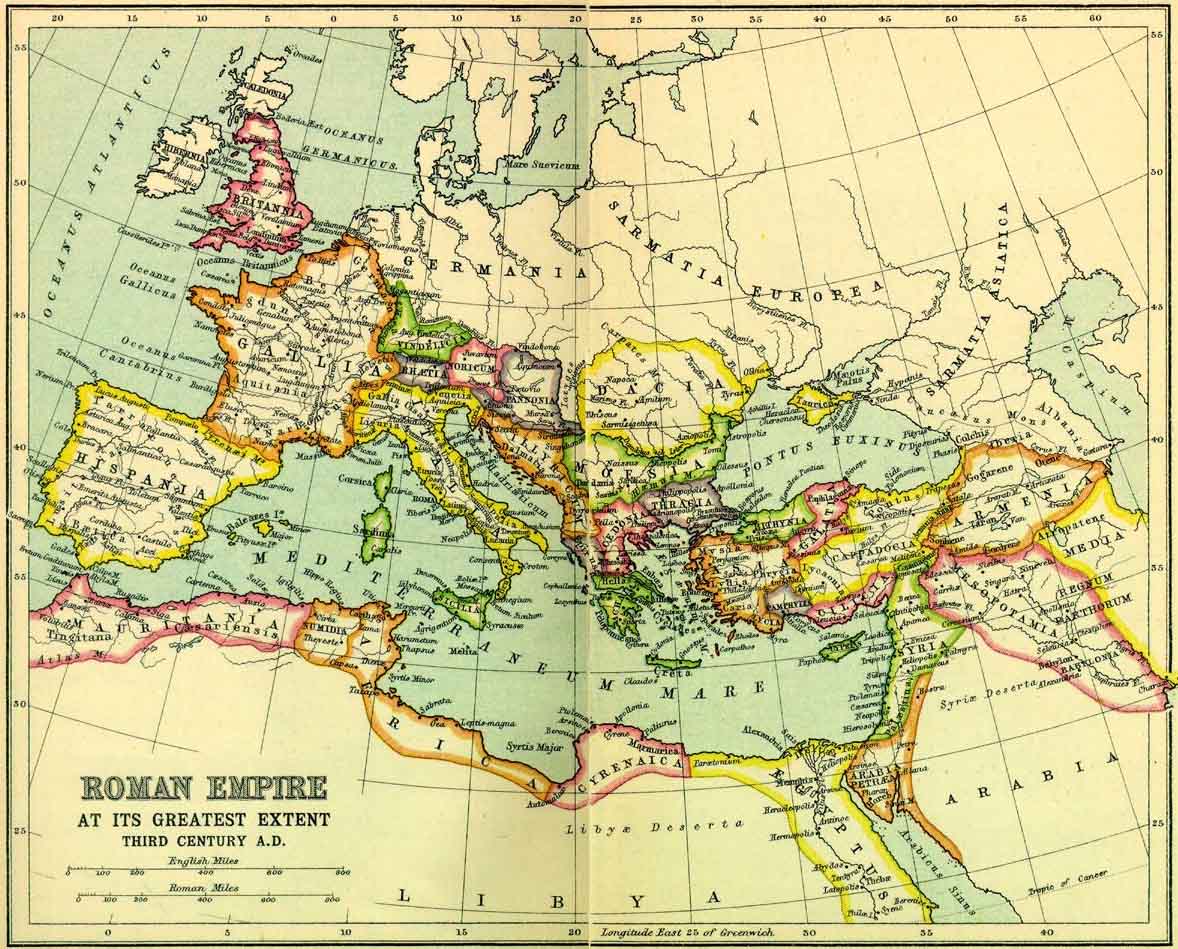
Britain remained under Roman rule for nearly 400 years, and this dominance had a huge impact on the culture, religion, and social behavior of the population. However, the use of Latin by locals was limited to members of the upper class of society, and constant attacks by the Celts forced the Romans to abandon their permanent occupation plans.
The influence of Latin during the times of modern English is also quite limited. For this reason, most of the linguistic legacy of the Romans comes down to just a few dozen words such as candel (candle), plante (plant), rosa (rose), port (harbor), piper (pepper), and others.
Old English (500 – 1100 AD)
After the Romans withdrew, a series of Germanic tribes, such as the Jutes, Angles, Saxons, and Frisii, invaded the British Isles and in time began to form permanent settlements. The Celts, no longer under the protection of the Romans, were completely scattered to remote areas.
All the newly arrived tribes spoke different variations of the West Germanic language similar to modern Frisian. The tribes settled in seven kingdoms, and some evidence from this time can be found in the names of places in England such as Luton, Reading, Nottingham, Bradford, and Birmingham.
Around 600 AD, Saint Augustine and his missionaries from Rome spread Christianity throughout Europe, and not long after, the Anglo-Saxons adopted the Roman alphabet, adding some letters for sounds that did not exist in Latin. Once again, the Latin language was limited to the upper class and the church clergy. During this period, important words such as fork, school, tower, paper, circle, bishop, priest, angel, baptism, monk, and lily were included in the language.
In the 10th century AD, after years of attacks, the Vikings reached an agreement with the Anglo-Saxons and established Danelaw, a Viking territory located in Northumbria and East Anglia, which existed for at least 4 decades. The Vikings spoke Old Norse, which is a North Germanic language. It had a heavy influence not only on the modern language, but also on the accent and pronunciation of words in northern England. The influence of Old Norse can be found today in words such as: skin, leg, neck, fellow, sky, cake, egg, skirt, bank, law, anger, knife, like, smile, hug, window, weak, wrong, mistake, ugly, ill, seem, want.
Many consider Alfred the Great, king of Wessex, to be the savior of the English language. When he became king, the Vikings had already destroyed most of the great monasteries in Northumbria and Mercia. To keep the language alive, he decided that people should no longer be educated in Latin, but in English.
Old English was a very complex language compared to modern English. There were over 10 classes of verbs whose endings changed in many situations. Nouns had 3 different genders, which declined into five cases, and adjectives could have 11 forms. It seems absolutely different from modern English, but once you understand the rules of pronunciation and spelling, modern English no longer seems so different from the old.